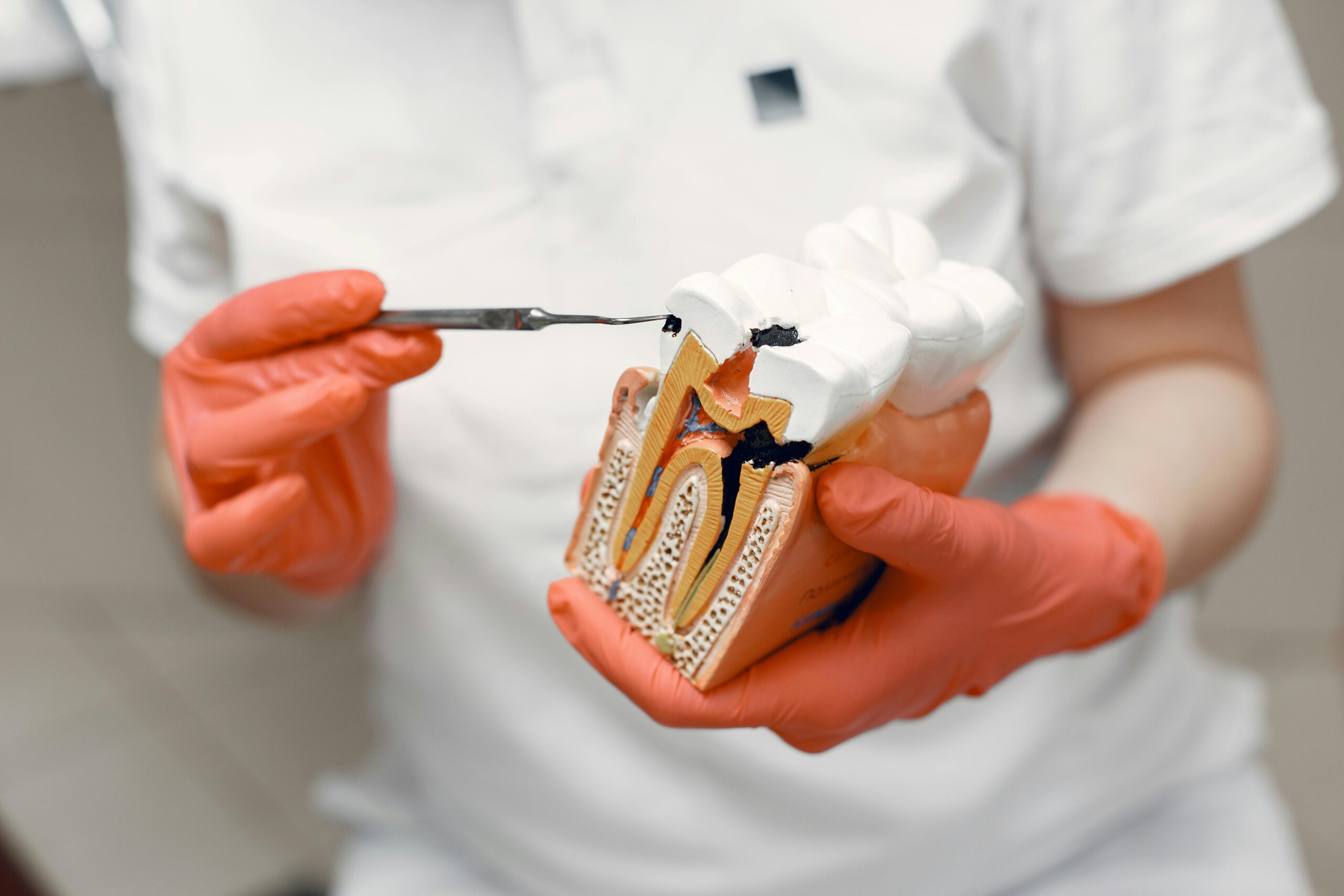
A root canal is a procedure used to repair and save a tooth that is severely decayed, infected, or damaged. When the inner portion of the tooth (the pulp and nerve tissue) becomes inflamed or infected, root canal therapy removes the source of infection and allows you to keep your natural tooth.
During the procedure, the infected nerve tissue, bacteria, and decay are carefully removed. The inside of the tooth is then thoroughly cleaned, disinfected, medicated if necessary, and sealed to prevent further infection.
Despite its reputation, modern root canal treatment is typically no more uncomfortable than receiving a filling. In most cases, the pain people associate with root canals actually comes from the infection prior to treatment — not the procedure itself. Once treated, the source of pain is removed.
After treatment, mild sensitivity is normal for a short time as the area heals. This gradually subsides as inflammation decreases.

Once the root canal is completed, your doctor will determine the best way to restore and protect the tooth. In most cases, a crown is recommended to:
With proper restoration and good oral hygiene, a root canal-treated tooth can last for many years.
If you are experiencing tooth pain or discomfort, it’s important to have it evaluated promptly. Early treatment can prevent more serious complications and help preserve your natural smile.