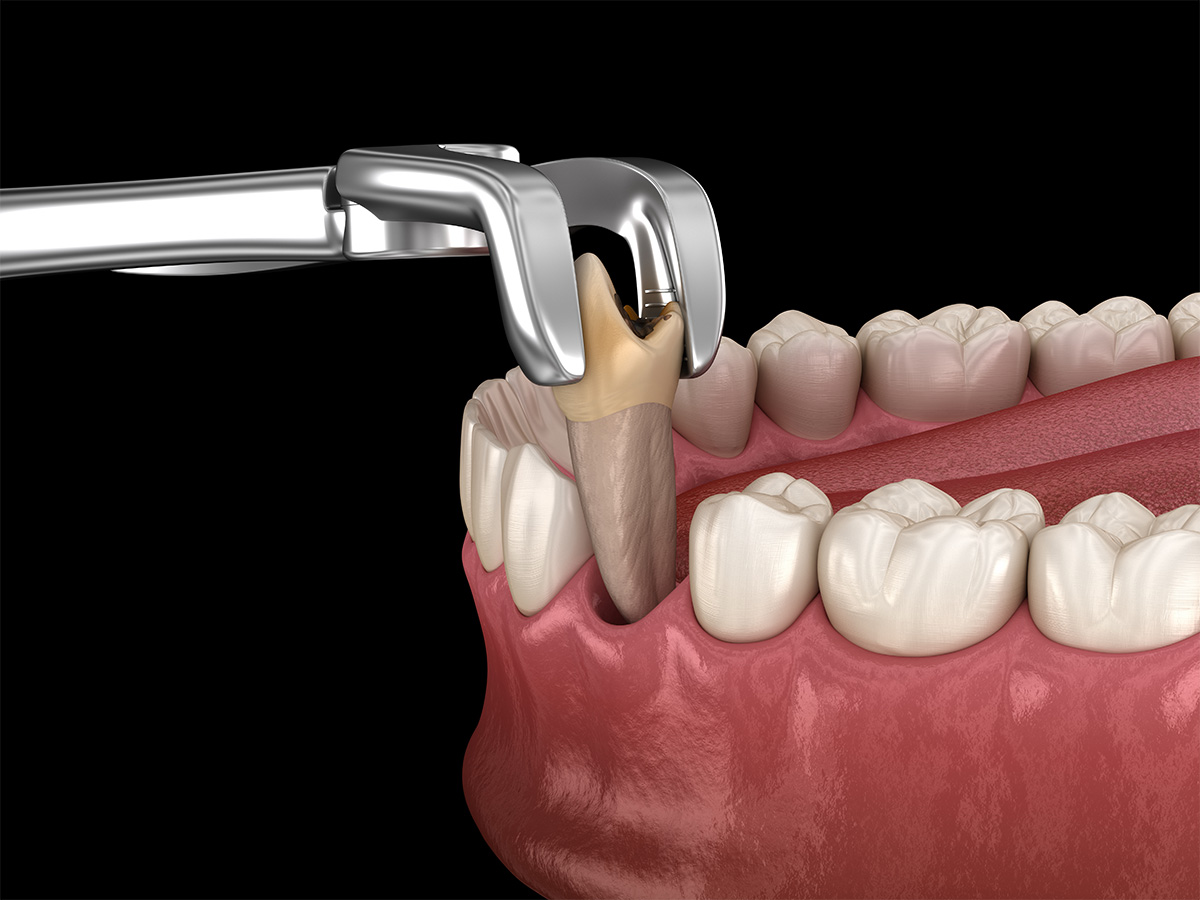
There are times when removing a tooth is the best option to protect your overall oral health. You and your doctor may determine that an extraction is necessary for a variety of reasons.
Our priority is always to save natural teeth whenever possible. When an extraction is recommended, it is because it is the healthiest solution for your long-term care.
At the time of your appointment, the area around the tooth — including the tooth, surrounding gums, and jawbone — will be thoroughly numbed with a local anesthetic to ensure your comfort.
During the procedure, you may feel pressure as the tooth is gently loosened and removed, but you should not feel pain. If you experience discomfort at any time, please let us know immediately so we can ensure you remain comfortable.
After the tooth is removed, a blood clot naturally forms in the socket. Gauze will be placed over the area, and you will be asked to bite down gently to help control bleeding.
It is normal to experience mild to moderate soreness for a few days following the procedure. This can typically be managed with over-the-counter pain relievers and following your post-operative instructions carefully.
Dry Socket
In some cases, the blood clot may become dislodged before the area has begun healing. This condition, called dry socket, can cause increased discomfort. If this occurs, please contact our office. We can place a soothing medicated dressing to protect the area and significantly reduce discomfort while healing continues.

Over time, the extraction site will gradually fill in with bone and smooth over. While complete healing can take several weeks to months, most patients feel significantly better within 1–2 weeks.
If you have any questions before or after your procedure, our team is always here to help guide you through the healing process comfortably and confidently.